

Email marketing only works if the emails actually arrive.
That sounds obvious, but it is a problem that quietly undermines a surprising number of email programs. The symptoms show up in the data — open rates that do not match expectations, campaigns that generate less response than they should, clients who are not seeing the return on investment that the platform or program promised. The cause is often not the content, the timing, or the audience. It is deliverability.
This is the story of a project that addressed that problem across approximately 40 client domains in about five weeks.
The Problem
A marketing program built around email as a primary channel was not delivering the results clients expected. Campaigns were being sent. Reports showed they were going out. But a closer look at the data revealed the issue: a meaningful portion of emails were being flagged as spam or rejected outright before they ever reached an inbox.
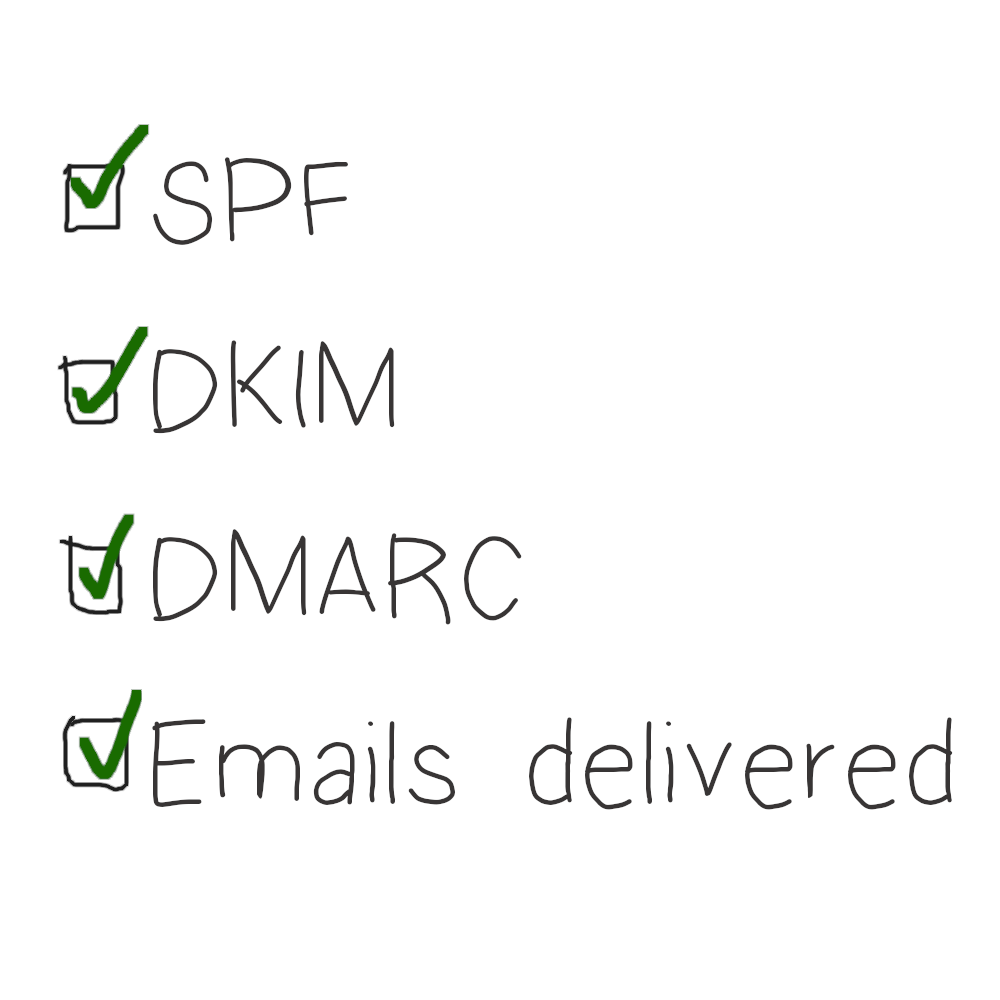
The root cause was authentication. Gmail, Outlook, and other major email providers had been moving toward stricter enforcement of three foundational email authentication standards: SPF, DKIM, and DMARC. Without proper configuration of these DNS records, email providers have no reliable way to verify that a message is legitimately coming from the domain it claims to represent. Messages that fail authentication get flagged, filtered, or blocked.
The result was a direct hit to the ROI of the email program. Clients were not getting the results they needed, and the core value proposition of delivering a turnkey email marketing that works was being undermined by a technical gap that had nothing to do with strategy or content.
What SPF, DKIM, and DMARC Actually Do
For readers who are less familiar with the technical side, a brief explanation is worth including here.
SPF (Sender Policy Framework) is a DNS record that tells email providers which servers are authorized to send email on behalf of your domain. If an email arrives from a server that is not on that list, providers treat it with suspicion.
DKIM (DomainKeys Identified Mail) adds a cryptographic signature to outgoing emails that receiving servers can verify. It confirms that the message was not altered in transit and that it genuinely originated from an authorized sender.
DMARC (Domain-based Message Authentication, Reporting, and Conformance) ties SPF and DKIM together and tells receiving servers what to do when a message fails authentication: quarantine it, reject it, or let it through. It also provides reporting back to the domain owner on authentication failures.
All three records need to be properly configured in the DNS settings for a domain. When they are missing or misconfigured, the consequences for deliverability can be significant. When they are properly in place, they signal to email providers that a message is legitimate — which dramatically improves the odds that it lands in an inbox rather than a spam folder.
The Approach
With approximately 40 client domains to address, the first challenge was visibility. Before anything could be fixed, the current state of each domain needed to be known at a glance.
To solve this, a custom Google Sheet was built using Google Apps Script to query DNS records in real time. Each domain had its own row. Separate columns tracked the status of SPF, DKIM, and DMARC independently, updating automatically so the current compliance state of every domain was visible without manual lookups. The dashboard became the operational backbone of the project — a single source of truth that made it immediately clear which domains were compliant, which were partially configured, and which needed immediate attention.
With that visibility in place, outreach began across all 40 client contacts. This was where the project became as much a communication challenge as a technical one.
Some contacts were technical — developers or IT staff who understood DNS and could implement records themselves once provided with the correct values. For those clients, the conversation was direct: here are the records you need, here is where they go, here is how to verify they are working.
Other contacts had little or no technical background. For those clients, the approach shifted. Explanations were kept simple and practical, focused on what the problem was causing rather than how DNS works. Step-by-step guidance was provided through their specific hosting interface, and follow-up checks confirmed that records were correctly implemented before moving on.
The goal throughout was to meet each client where they were, not to apply a single approach across a varied group of contacts with different levels of technical expertise and different organizational priorities.
The Outcome
Within approximately three weeks, the majority of client domains reached full compliance across SPF, DKIM, and DMARC. By the end of five weeks, 97% compliance had been achieved across all 40 domains.
The remaining 3% reflected a small number of situations that were outside of direct control — unresponsive contacts, competing organizational priorities that delayed implementation, or technical limitations on specific hosting environments that required more complex solutions than the standard implementation path.
For the clients who reached compliance, deliverability improved measurably. Emails that had been landing in spam folders or being blocked were now reaching inboxes. The email marketing program began performing the way it was designed to perform, and the ROI that clients had been promised became achievable again.
What This Project Demonstrates
Two things stand out from this project as worth carrying forward.
The first is that email deliverability problems are often fixable. If your email campaigns are underperforming — if open rates are low, if response is lower than expected, if something feels off about how the program is performing — authentication is one of the first places to look. SPF, DKIM, and DMARC configuration issues are common, they are diagnosable, and they are solvable. The fix does not always require a significant investment of time or money. It requires knowing where to look and how to address what you find. This doesn’t apply only to email marketing, either. The same deliverability issues can happen on one-to-one emails if a custom domain is not properly configured.
The second is that solving a technical problem at scale across a diverse group of stakeholders requires more than technical knowledge. It requires the ability to assess what each stakeholder needs, communicate at their level, and keep a complex multi-contact project moving toward resolution without losing momentum. The dashboard made the problem visible. The communication made the solution possible.
Speak LLC provides web strategy, SEO, and digital marketing consulting for organizations that want their digital presence to work harder. If you are dealing with email deliverability challenges or other digital performance issues, we would be glad to talk.